
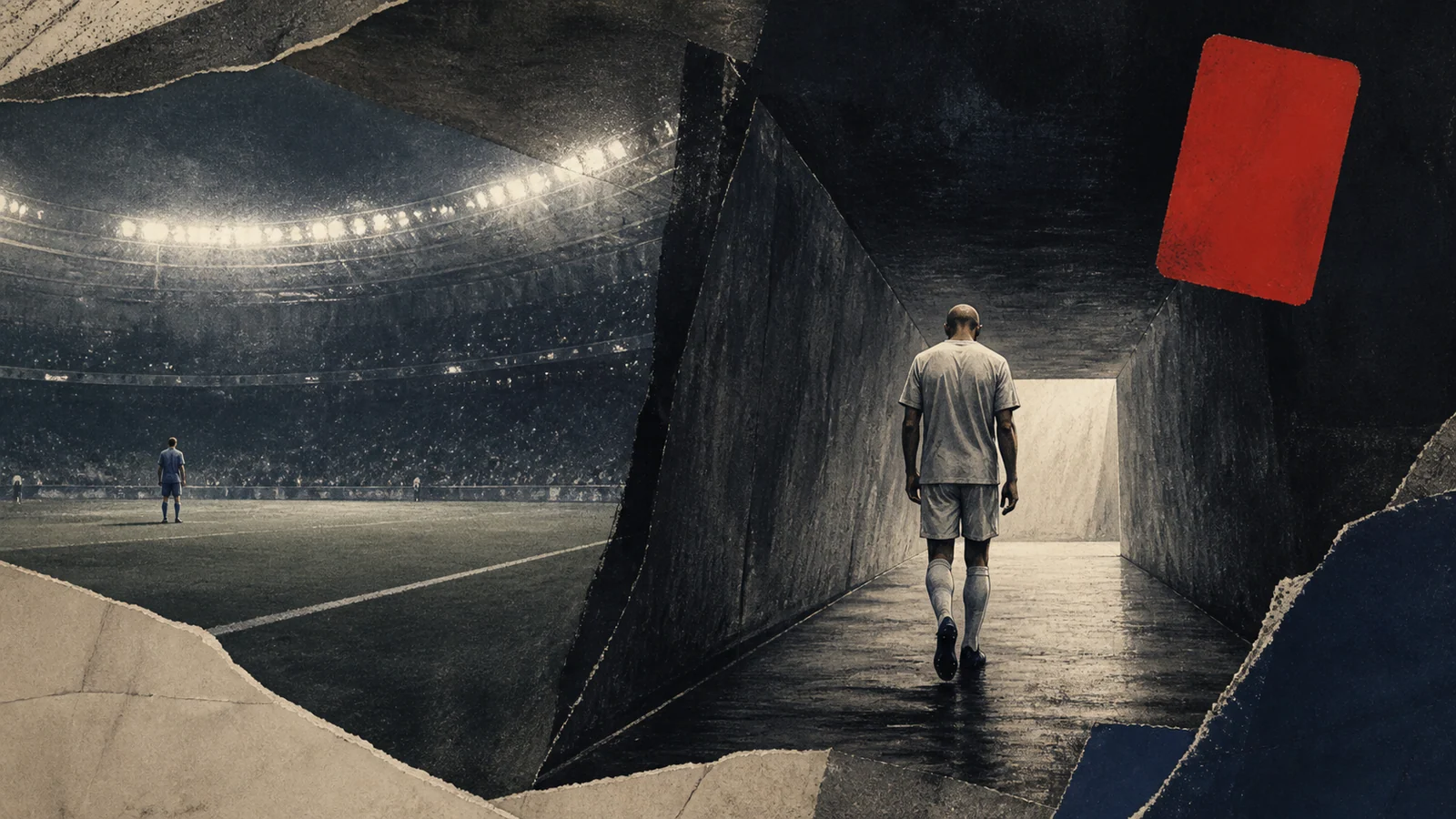
Why did Zidane headbutt Materazzi in the 2006 World Cup final?
Zinedine Zidane was sent off in the 110th minute of the 2006 World Cup final after headbutting Marco Materazzi. Italy then won the penalty shootout 5–3. The incident is confirmed; the exact words and motive behind it should be presented as disputed accounts rather than settled fact.
Read more long-form football history in the Iconic Moments archive or return to the full editorial index.
The Olympiastadion in Berlin hosted the final on 9 July 2006. Zidane had already announced his retirement, so this would be the last match of his 21-year professional career.
He scored in the seventh minute with a chipped penalty that struck the underside of the crossbar and crossed the line.
A final career arc in three moments
The undisputed match sequence is clear even where the words and motive behind the incident remain contested.
Zidane scores
A chipped penalty gives France the lead in his final professional match.
The red card
The incident with Materazzi ends Zidane's night before the shootout.
Italy win 5–3
France lose the penalty shootout without their captain.
Materazzi equalised for Italy in the 19th minute. The match reached extra time at 1–1 before the incident in the 110th minute.
“He had 10 minutes of football left in his career. He spent them walking off the pitch alone.”
FootieGuide
What happened
After Materazzi pulled Zidane's shirt, the two exchanged words. Zidane walked away, turned back and drove his forehead into Materazzi's chest.
Referee Horacio Elizondo did not initially see the incident. After consulting the other match officials, he showed Zidane a red card for violent conduct. This was before VAR, and later accounts differed on exactly how the officials identified the offence.
2006 World Cup final timeline
Zidane chips penalty off crossbar to give France 1-0 lead.
Marco Materazzi headers home corner kick to tie match 1-1.
Zidane receives straight red card. Walks past trophy into retirement.
Italy wins 5-3 on penalties after Trezeguet hits crossbar.
Zidane's place in the tournament
Zidane was 34 and had returned from international retirement for France's qualifying campaign. He then helped France beat Spain, Brazil and Portugal in the knockout rounds and was awarded the tournament's Golden Ball despite the red card in the final.
He had also led France to the 1998 World Cup and scored Real Madrid's winning goal in the 2002 Champions League final. That history made the contrast in Berlin stark: one of the era's leading players finished his career walking past the World Cup trophy before the match was over.
What Materazzi said
Zidane said after the final that Materazzi had repeatedly insulted his mother and sister. Materazzi later acknowledged insulting Zidane's sister, but their accounts of the exchange were not identical and no live recording established every word.
Zidane apologised to children who had watched the incident but did not excuse Materazzi's remarks. That explains the provocation he described; it does not make the headbutt legal or change the red-card decision.
France lost
Italy won the shootout 5–3. David Trezeguet, who had scored the golden goal to win Euro 2000, hit the crossbar. The ball dropped on the wrong side of the line.
France had been the better team across most of the tournament. They did not win.
Zidane was still awarded the Golden Ball as the tournament's best player. The award and the red card now sit beside each other in the record of his final World Cup.
“The committee gave him the Golden Ball. He wasn't in the room.”
FootieGuide
What it left behind
The headbutt became one of the most reproduced images of the tournament. Algerian artist Adel Abdessemed later turned it into a bronze sculpture, extending the incident beyond match footage and newspaper photographs.
The sporting reading is simpler. Materazzi provoked Zidane, Zidane retaliated, and France lost their captain before the shootout. The cultural debate around honour, self-control and provocation came later; it should not be confused with the match record.
The walk
The broadcast followed Zidane as he left the pitch and passed the World Cup trophy. His teammates remained in a 1–1 final that would be decided without him.
That walk endures because it compresses the facts into one image: Zidane's final match, the trophy beside him, and a red card that prevented him from taking part in the shootout. Italy won; the disputed exchange and its consequences remained part of how the final was remembered.